Ontario Northern Pike Fishing
On Lower Manitou Lake
Trophy Northern Pike to 25 Pounds
Lake Trout Fishing
Muskie Fishing
Bass Fishing
Pike Fishing
Walleye Fishing
Ice Fishing
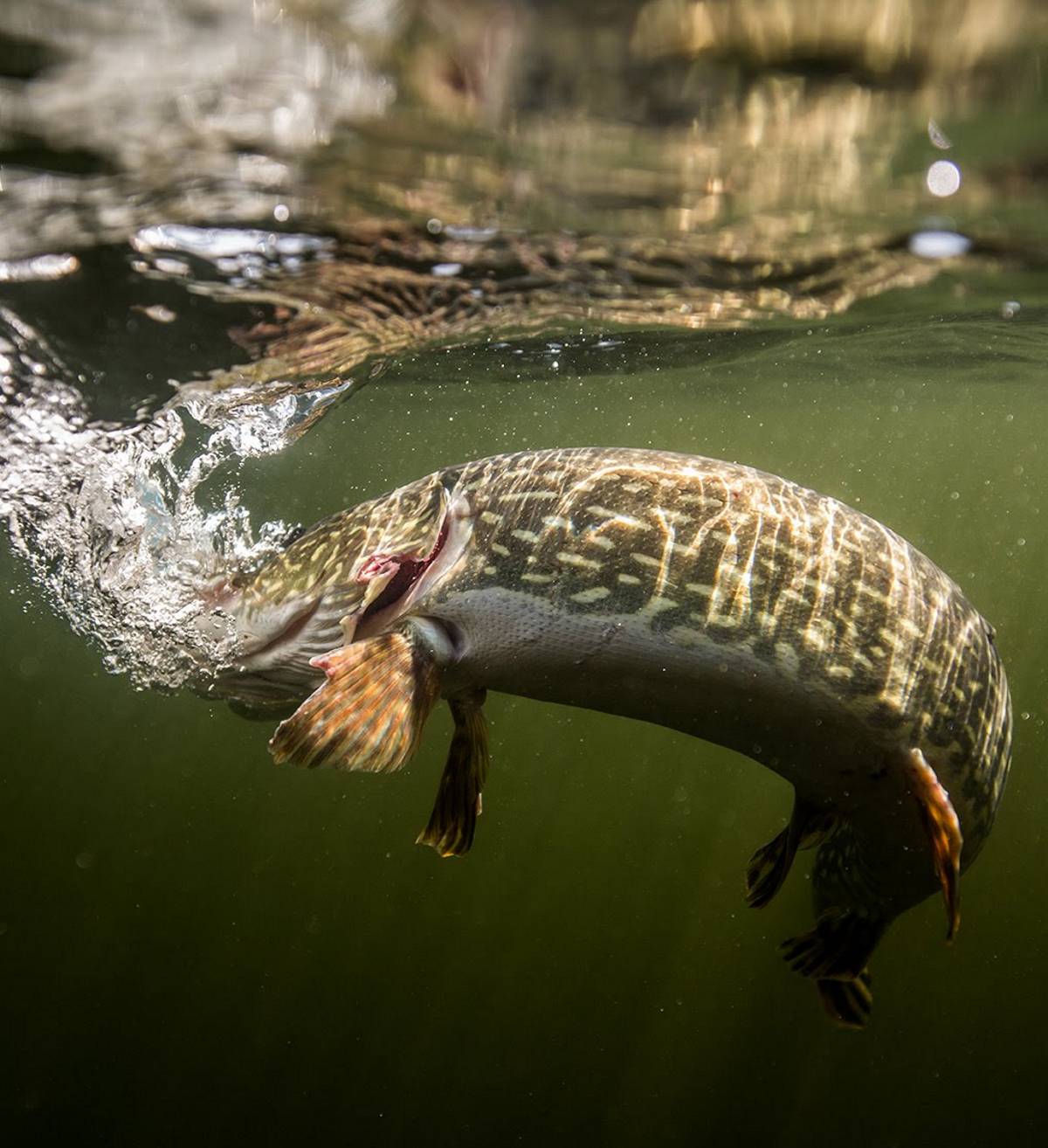
Northern Pike Fishing on Lower Manitou Lake
If you look at the satellite photo of Lower Manitou Lake, you can see that the north-east end of the lake is a maze of islands, rocky points and small bays. Most of the bays have weeds such as Water Cabbage, Pickerel Weed, Lily Pads and Bulrushes. These are the conditions that northern pike really like. It also has water-flow with a constant supply of migrating baitfish.
There is water-flow between Upper Manitou Lake and Lower Manitou Lake. Baitfish actively migrate through this area, thus the northern pike just sit there and ambush their prey and grow larger. There are muskie in the area, but they tend to stay in areas with quick access to the larger open areas of the lake. With this in mind, our northern pike and muskie population is segregated, and the muskie population does not prohibit northern pike from growing. There is enough room and food for everybody.
Northern pike on Lower Manitou Lake run right through the sizes, and most of what you catch will be in the 20 to 40 inch range. You could spend the day hitting back bays during the right atmospheric conditions, catching 30 to 60 pike in a day, depending on how hard you fish and how good you are at quickly taking lures out of pike mouths!
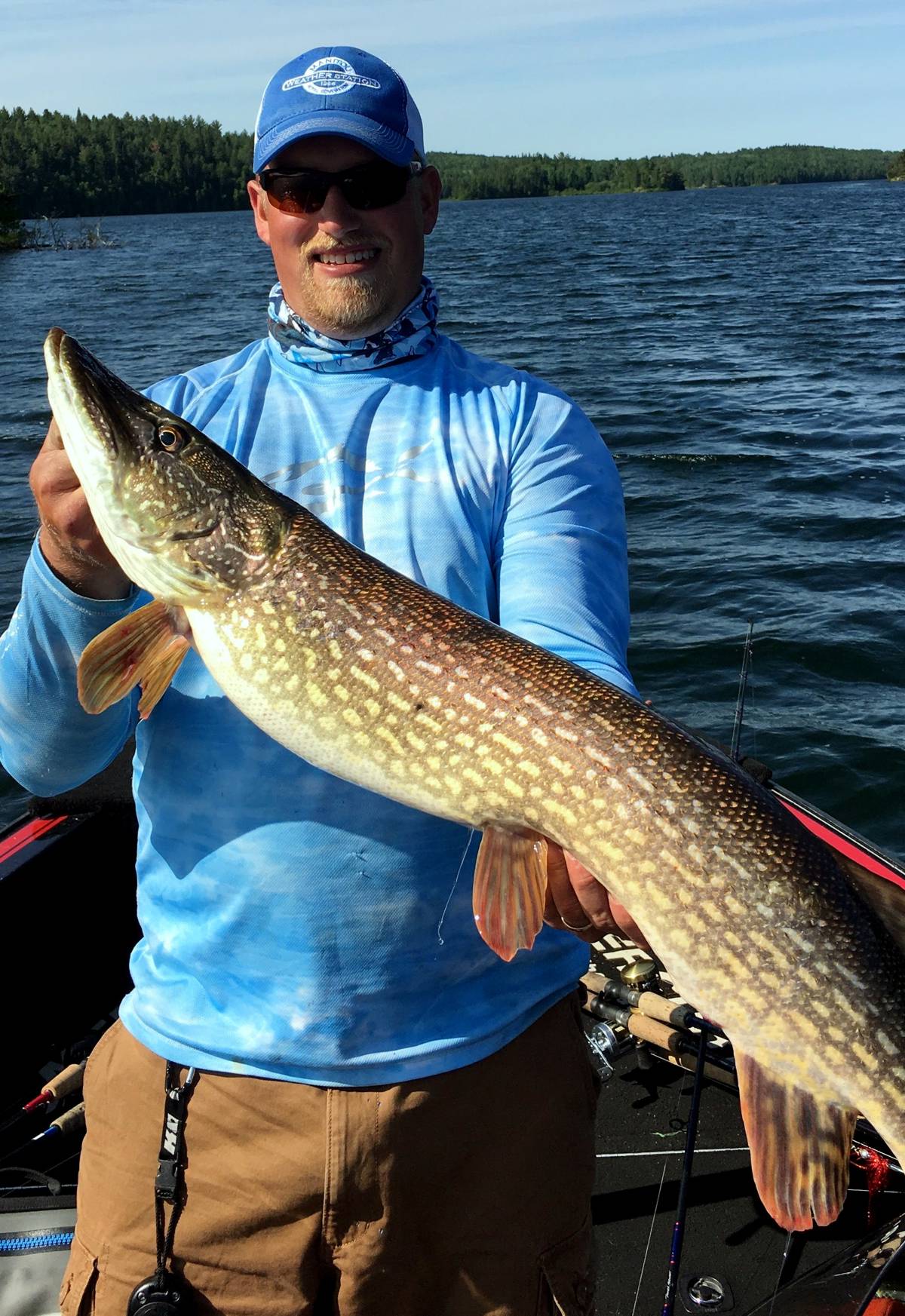
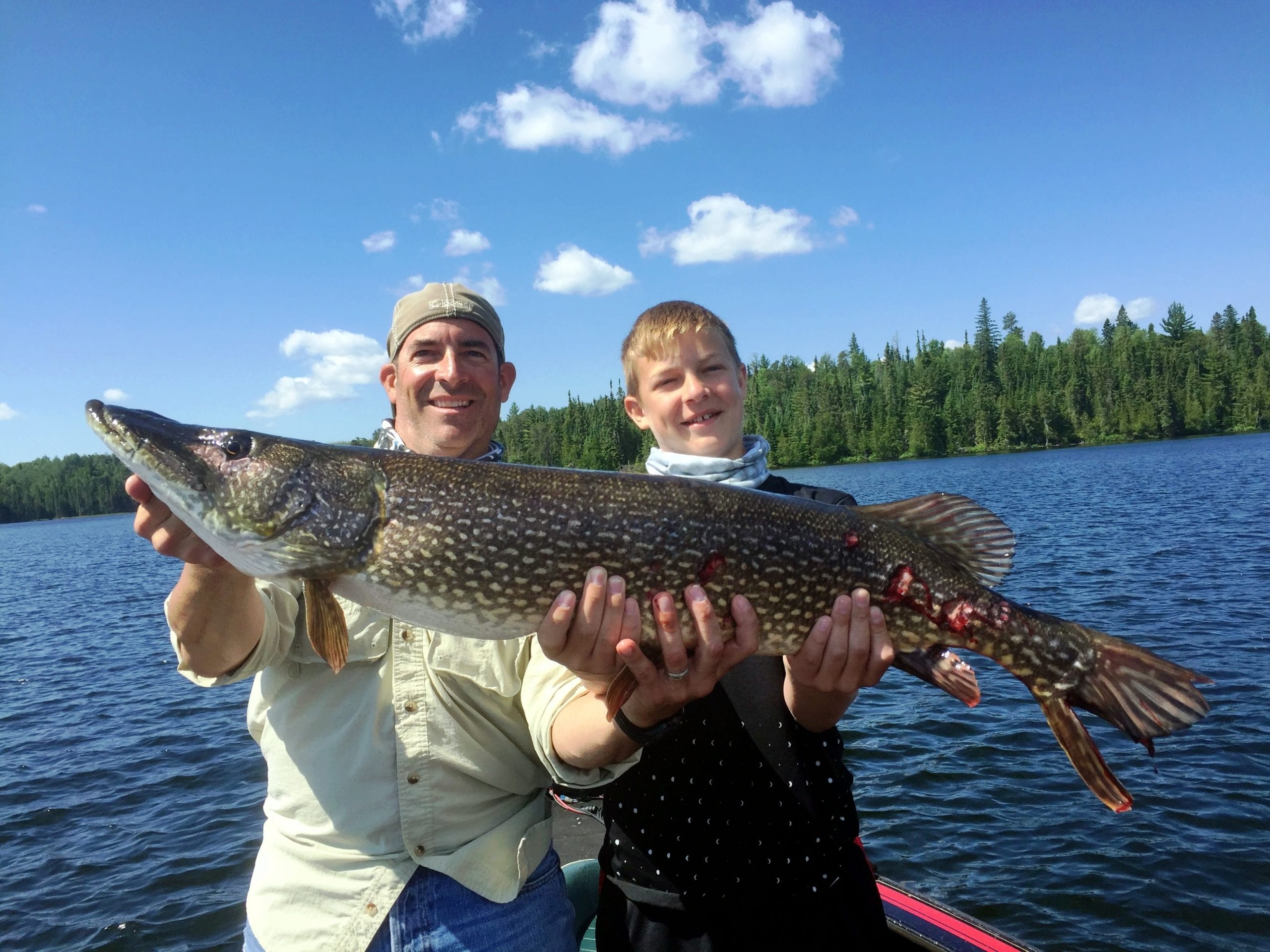
Catching pike all day is very hard on your lures. You can sacrifice numbers and go after the big ones. Fish over 40 inches are caught most seasons, and the largest go around 25 pounds. Lower Manitou Lake is a big-fish lake, there is no shortage of food and the lake has minimal fishing pressure.
Smaller pike sit in the weeds in the back of bays or they hide in weed beds out on the lake. The really big pike behave differently. Big monster trophy northern pike are ambushers – they hang around rocky points leading into bays. They will also hang around areas between weed-beds and drop-offs. The best spots are close to narrows with some water flow and baitfish migrating through.
Even though there is a great population of trophy pike in the lake, the biggest fish take work to find. If you diligently fish for pike all week and you are an experienced pike hunter, you should catch a couple in the trophy class. Any northern pike in the 15 to 23 pound range is an excellent fish, and a pike that size is rare on any lake. But rest assured, Lower Manitou Lake is quite capable of producing them.
You want to be mobile to find pike on Lower Manitou Lake, so consider fishing out of one of our rental fishing boats perfect for pike fishing, or hiring our expert fishing guides.
Northern Pike Fishing Tips
How to Catch Pike:
Northern pike hit just about any lure. They are the easiest fish to catch. Here are a couple of tips to maximize the amount of strikes and some ideas for really big trophy pike.
The very best bait is a large chub or sucker minnow, but unfortunately many lakes do not allow minnows in an effort to stop invading species.
Lures:
Traditionally the best lures and probably the most popular lures are the Red-&-White Daredevil and the Yellow 5-of-Diamonds Daredevil. You use the red in clear water and the yellow in murky water. Spinnerbaits, crankbaits, bucktails and Williams Weedless Spoons also work well. When using a Daredevil, try casting up high and just before the lure hits the water, jerk it towards you so the lure slaps the surface. This slap sound seems to trigger a better feeding response from bigger pike. Pike are also well known for hitting surface lures. Jitterbugs and Spooks are excellent for pike. A growing trend in pike fishing, which is getting very popular, is fly-fishing for pike. With large pike flies, you can drop the fly in an opening in the middle of thick weeds, which would not be practical for normal lures.
Where are the Pike:
Pike can be found everywhere. You will find them in the thick weeds or off shoals and even in the streams that run into the lake. Big trophy pike generally stay in areas where they can ambush walleye, bass and small pike.
Time of Year:
In many Northern Ontario lakes northern pike will be shallow in the spring and summer and then start to go deep in mid-August. This is not a big issue on Lower Manitou Lake. Many pike seem to stay shallow while others follow bass, trout and baitfish down to the edge of drop-offs. In the late summer and fall, either fish 15 feet deep off of shoals and ridges or right up in the really shallow weedy water. Some pike go really deep and you can catch them using lake trout techniques.
Below is a list of prime spots for big trophy Northern Pike:
- Points leading into weedy bays
- Along wild rice beds where there are lots of walleyes
- Stream or river mouth
- In the thick cabbage weed or other big leaf weeds
- Under lily pads
- Narrows between lakes or open water where walleyes migrate
- Drop offs close to thick shallow weeds
- Deep ridges
- Shoals or rocky points where the bass and walleye hang out is a good spot. If the walleye or bass stop feeding, it may mean a big pike has started to feed. This is when you switch to something big and flashy.
Top NORTHERN PIKE Lures
- 5 of diamonds spoon
- X Rap
- Mepps #5 (silver)
- Panther Martin
- Husky Jerk
- Phantom
- Cracklin Raps
- Twister Tails
Northern Pike Weight Calculator
Manitou Weather Station
Northern Pike Fishing Photos

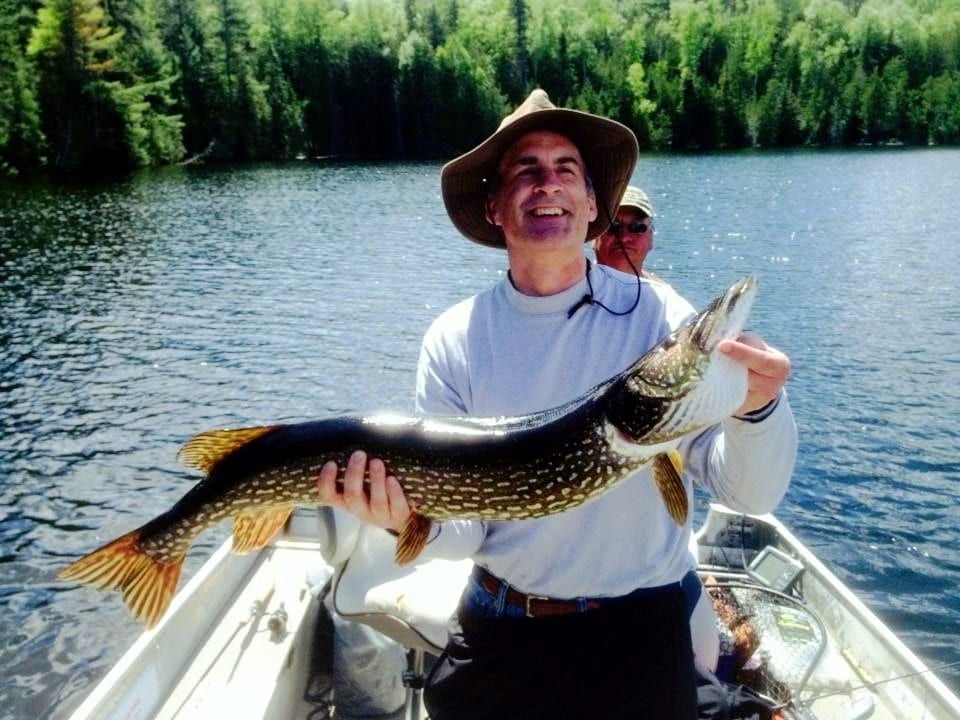
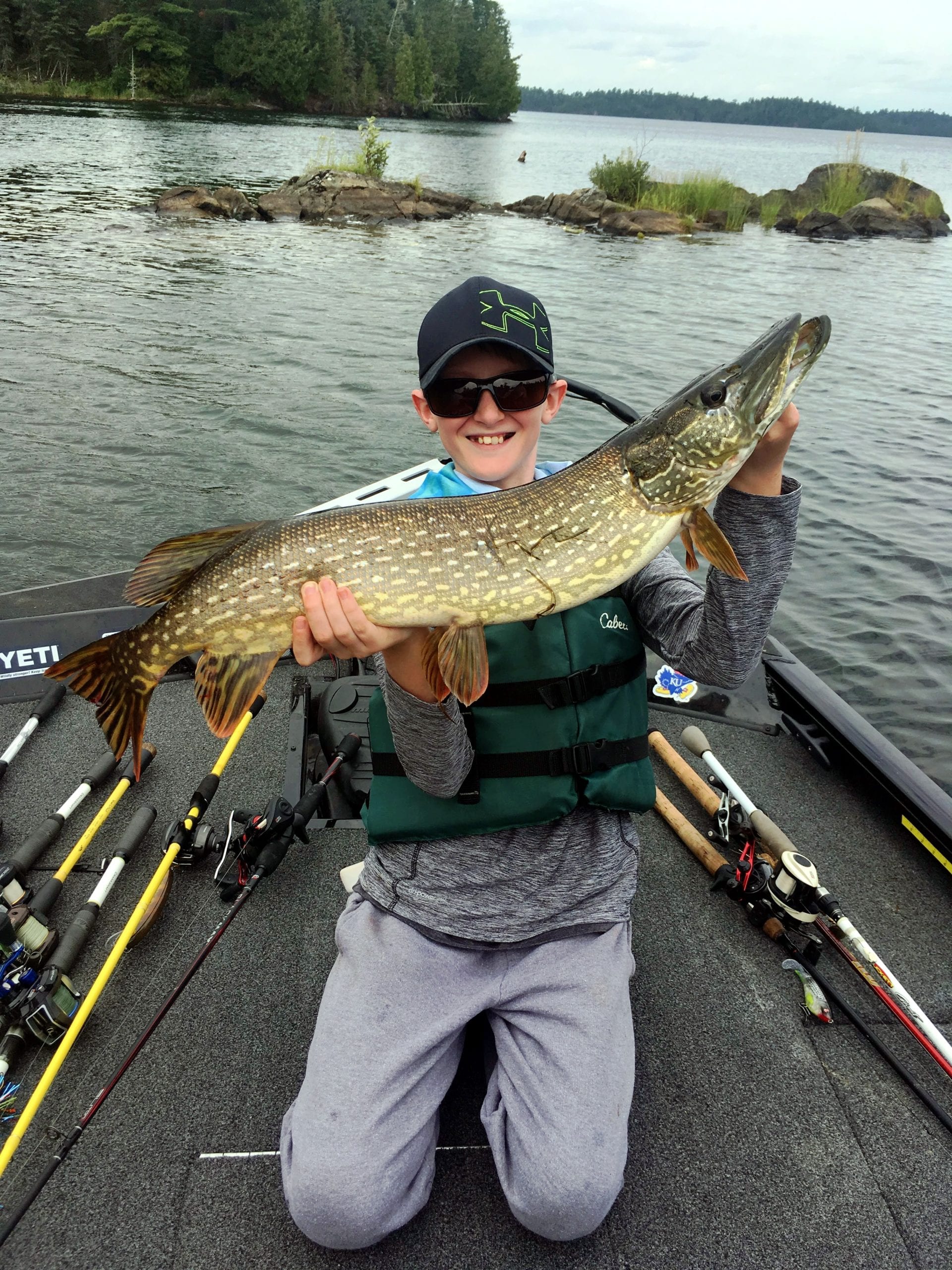
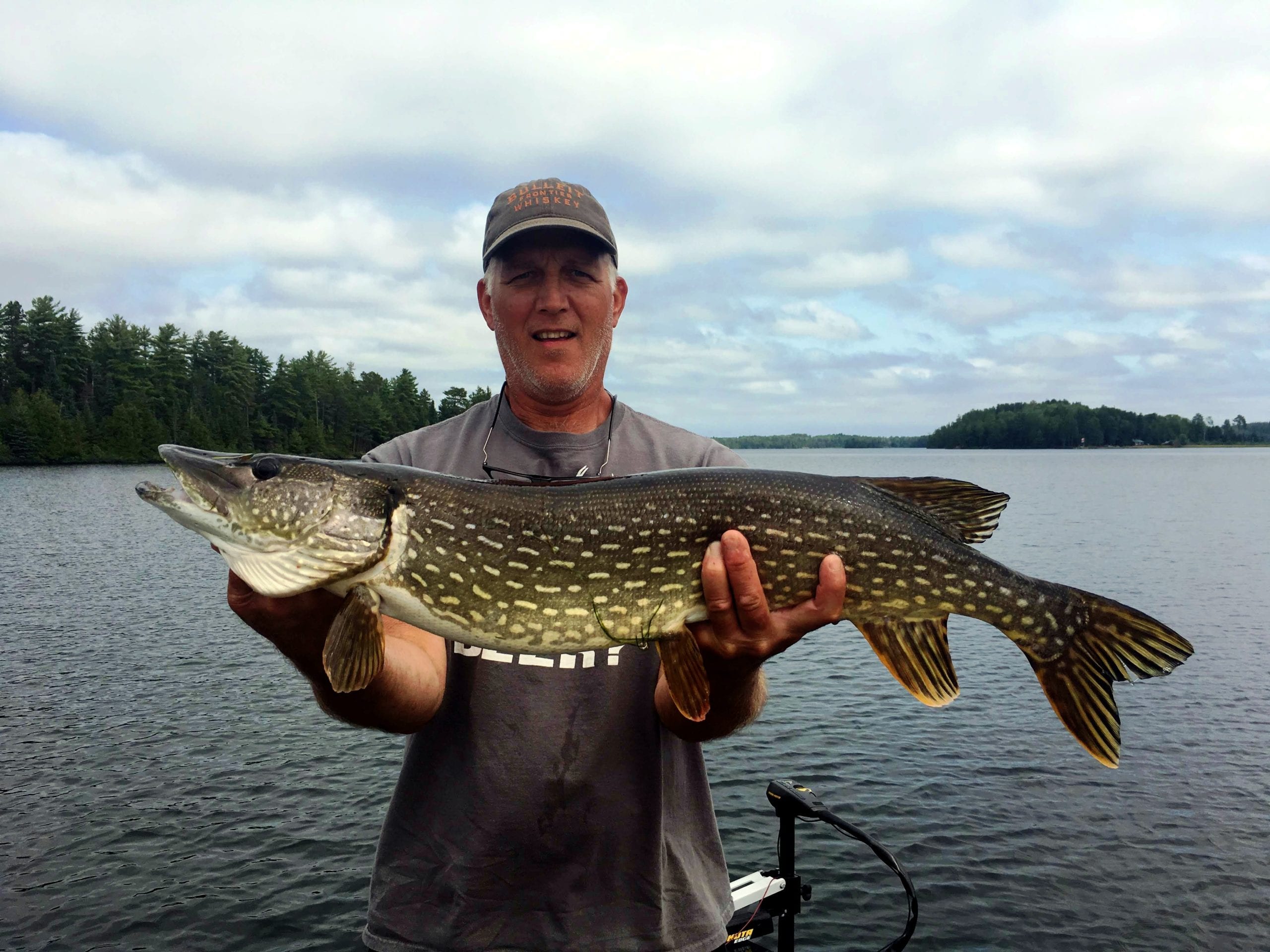
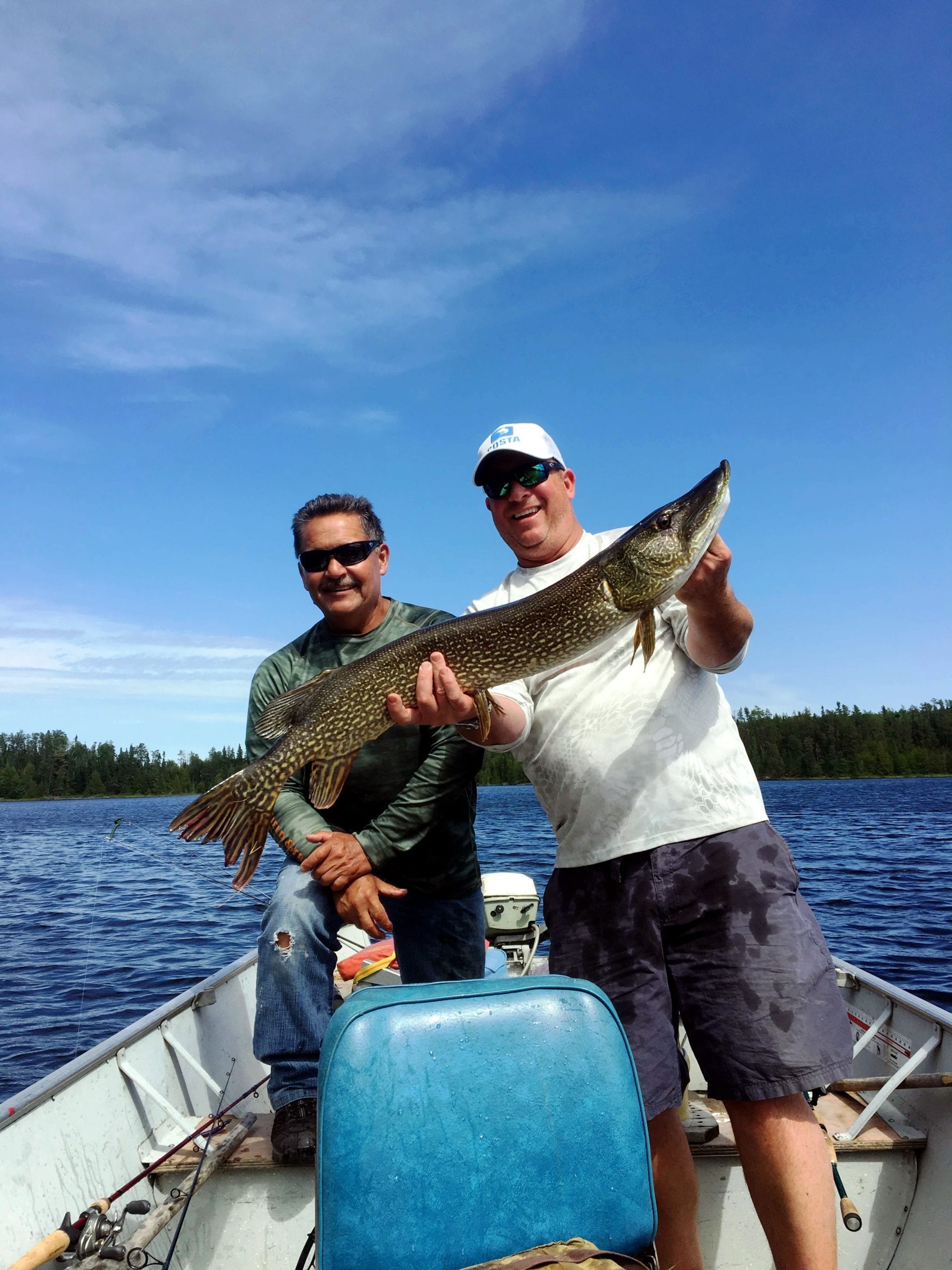

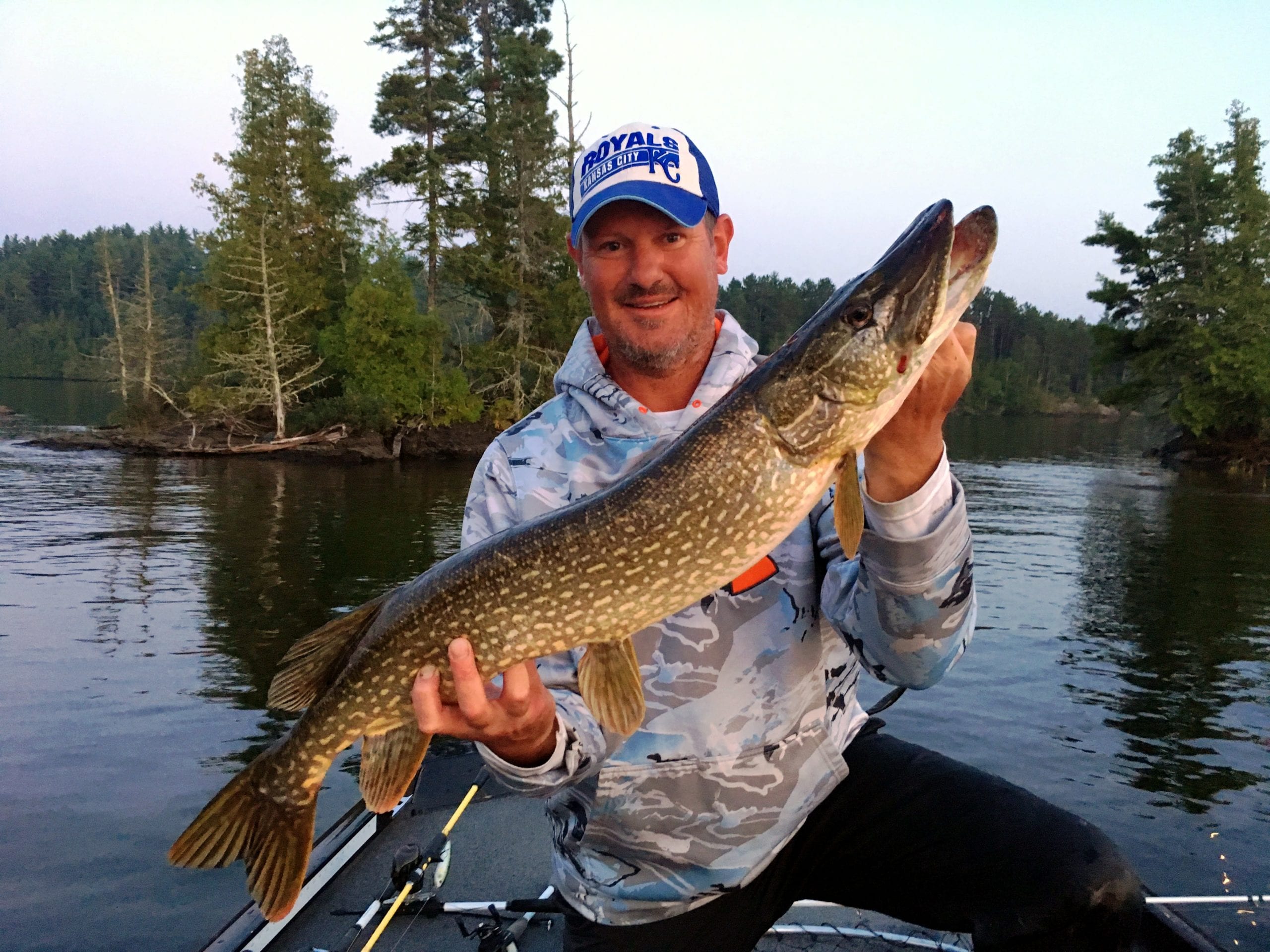
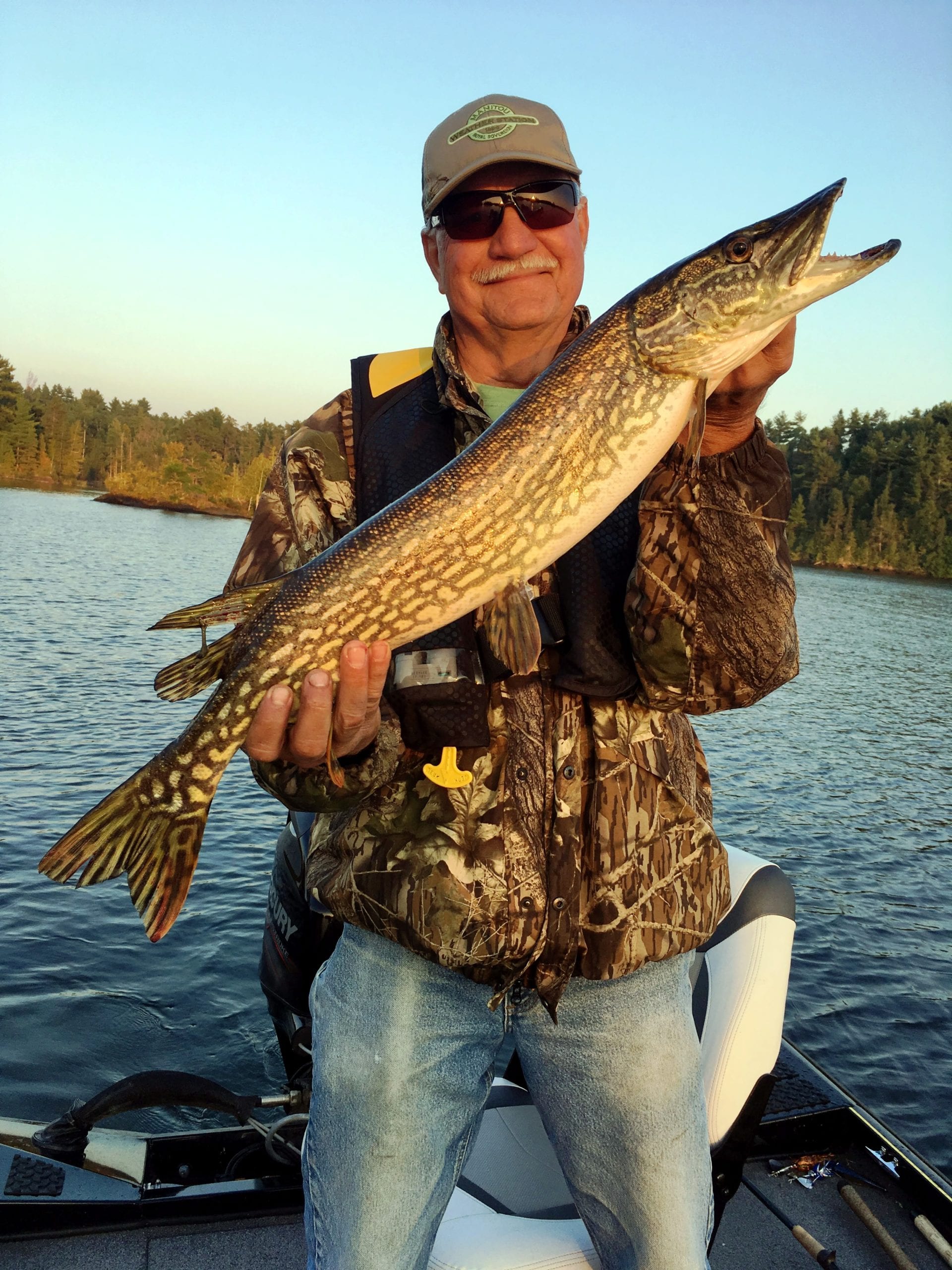
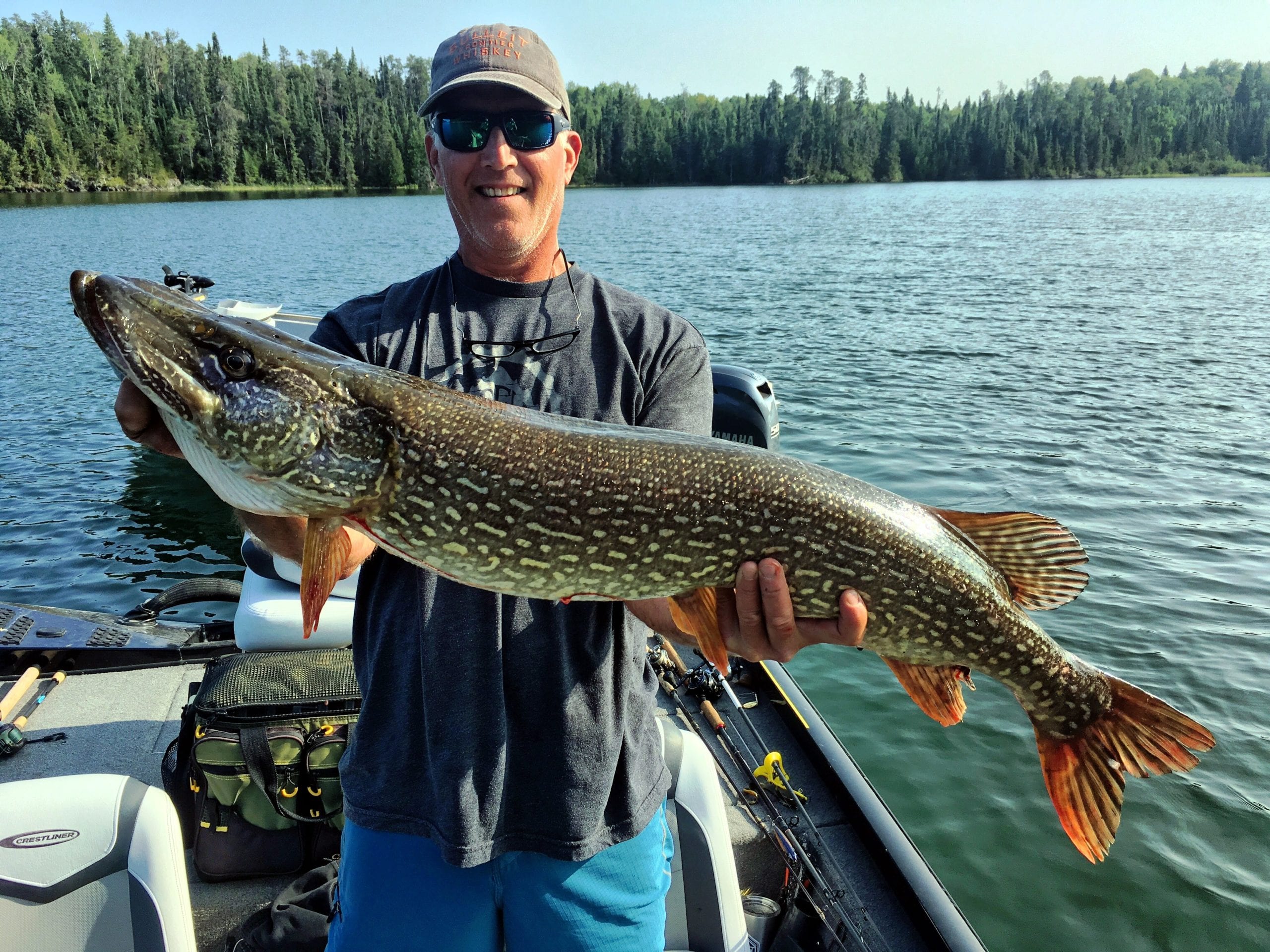
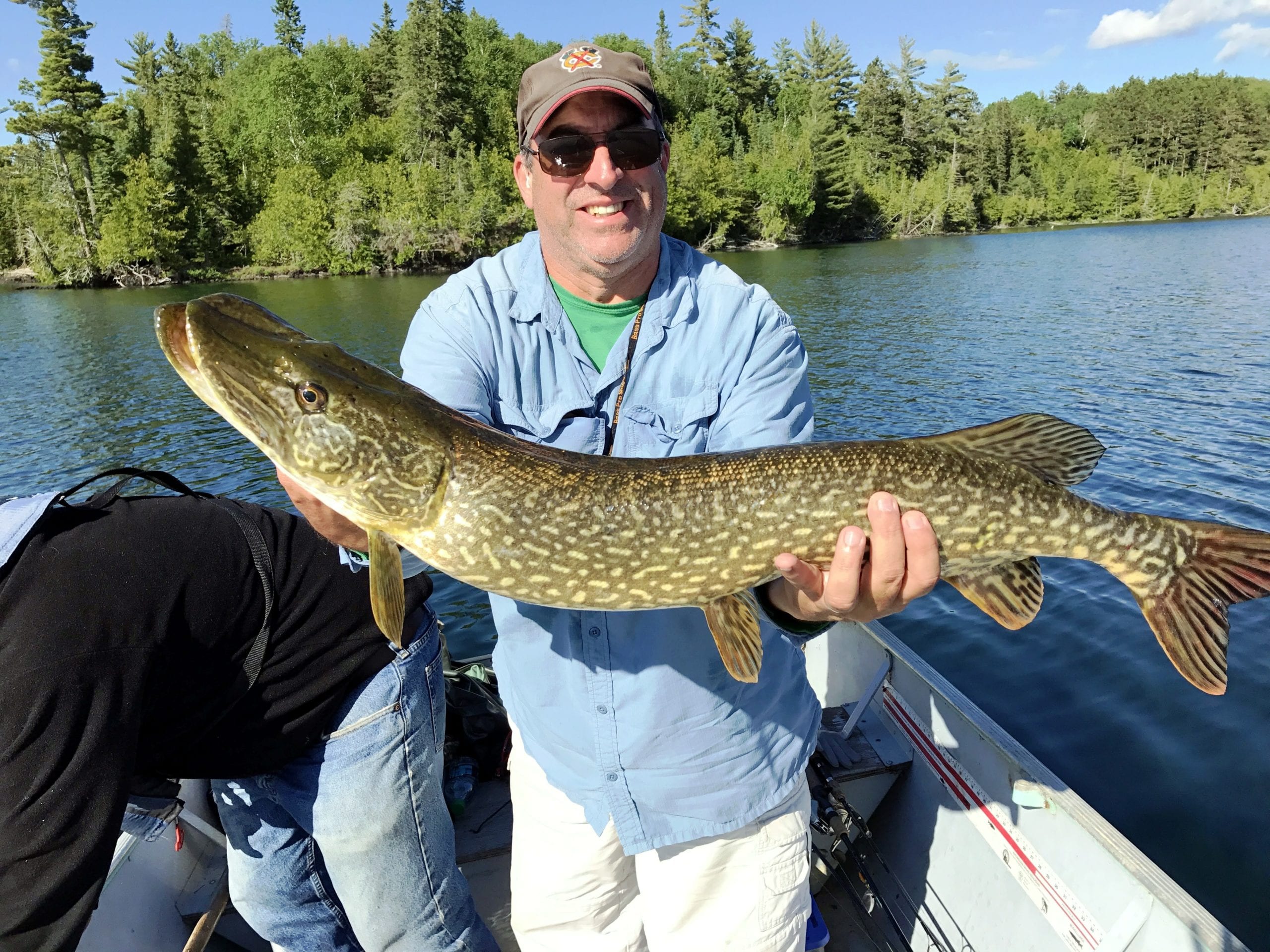
Pike Fishing on Lower Manitou Lake: Frequently Asked Questions
How big do northern pike get on Lower Manitou Lake?
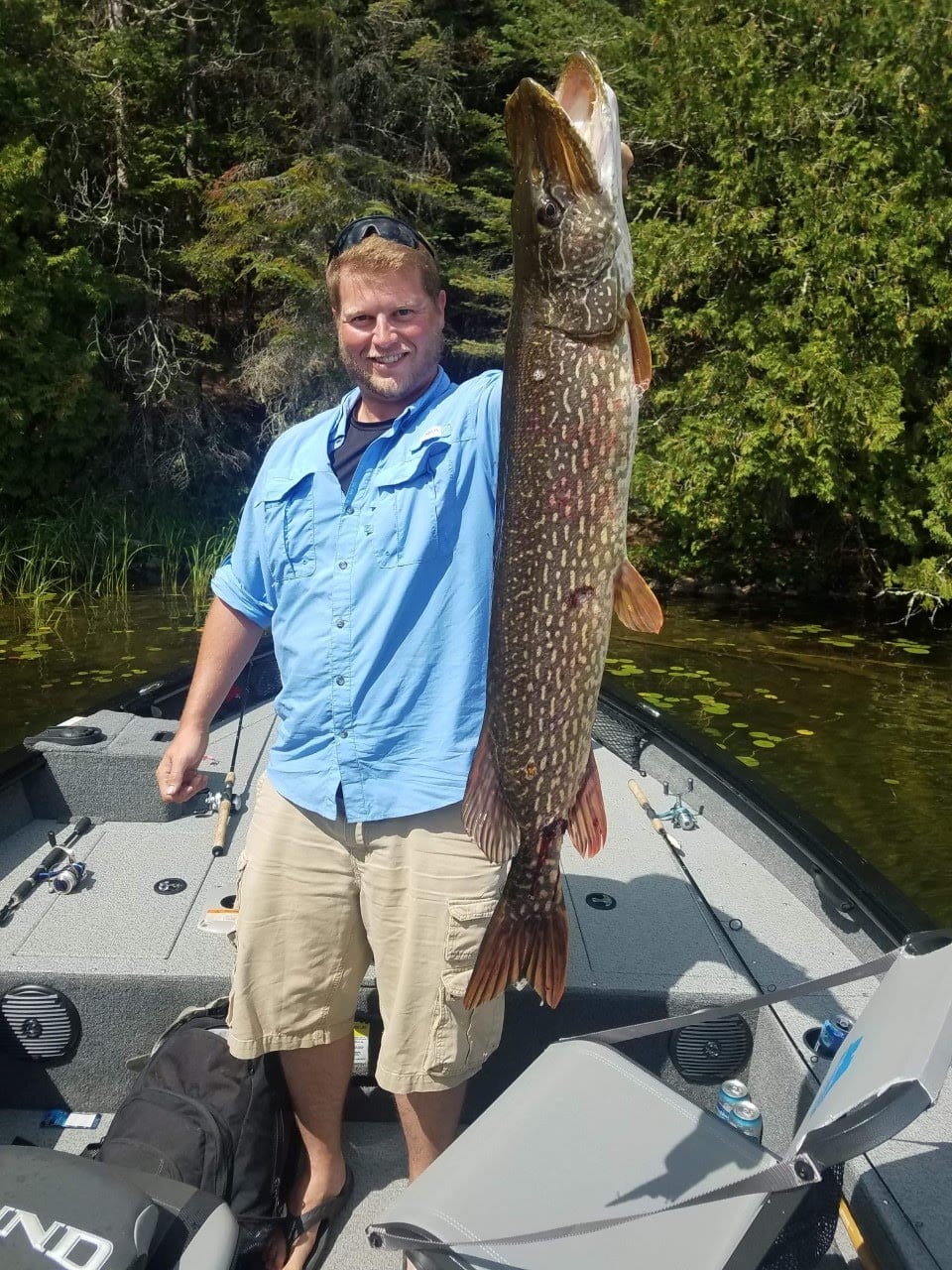
Northern pike here run right through the sizes, commonly 20 to 40 inches, so there is always something willing to eat. Fish over 40 inches are caught most seasons, and the largest go around 25 pounds, which is a rare fish on any lake and a genuine trophy on this one.
How many pike can I catch in a day on Lower Manitou Lake?
Anglers fishing for numbers rather than size can catch 30 to 60 pike in a day under the right conditions. It is the species to point a first-time visitor or a young angler at, because the action rarely stops.
Where do you find pike on Lower Manitou Lake?
Find the weeds and you find the pike. Lower Manitou Lake is deeper and colder than most lakes in the region, so weed beds are worth seeking out and locating them is most of the work. Once you do, the productive water is points leading into weedy bays, wild rice beds, stream mouths, thick cabbage weed, drop-offs next to shallow weeds, and the narrows between lakes where baitfish move through. Big pike hold in the weeds and off shoals through the summer, in the greatest numbers early in the season.
What lures work best for northern pike on Lower Manitou Lake?
Red-and-white and yellow five-of-diamonds Daredevils are the traditional favorites, along with spinnerbaits, crankbaits, bucktails, and topwater lures like Jitterbugs and Spooks. Owner and guide Kris Esselink fishes a Vibrax #6, X-Raps and Phantoms, and reaches for a Mepps #5 when in doubt. Pike also take a big streamer well on a fly rod, which is a good way to fish the weed edges.
Can I keep a pike for shore lunch?
Yes, and pike is the fish to keep here. Northern pike from Lower Manitou Lake eats better than its reputation suggests. It is firm, white and mild, and there are enough of them that taking a few for a shore lunch does the fishery no harm. Muskie and walleye go back; pike is what ends up in the pan. Keep within Ontario’s limits and a guide will show you how to bone one out.
Do muskie and pike compete for the same water on Lower Manitou Lake?
No, and that is part of why both grow well here. The lake’s muskie and northern pike separate naturally: muskie hold near open water and the reefs, while pike stay in the shallower, weedier bays. You can fish for one in the morning and the other in the afternoon without leaving the same stretch of shoreline.
How do you get to Manitou Weather Station on Lower Manitou Lake?
Two ways, and unlike most remote lodges in Northwestern Ontario you get a choice. Drive and boat in – about 43 miles by road from Fort Frances on Highways 11 and 502, then Cedar Road and Esox Landing Road to the boat launch at Esox Landing, and roughly 24 miles north by boat to camp. Or fly in by float plane from Fort Frances, about 45 minutes. Because there is road access to the launch, you can bring your own boat and as much gear as you want instead of packing to a float plane’s weight limit. In winter, access is by snowmobile.
Do I need an Ontario fishing license to fish for pike at Manitou Weather Station?
Yes. Every angler needs a valid Ontario fishing license and an Outdoors Card, and one license covers northern pike, muskie, lake trout, walleye and smallmouth bass alike. Buy both before you arrive, online from the Ontario government, at any ServiceOntario location, or from tackle and outdoor stores in Fort Frances on your way through. Non-residents choose between a Sport license and a Conservation license; the Conservation license costs less and carries lower catch limits. Size and catch limits are set by Ontario regulation and change from time to time, so check the current fishing regulations summary before you travel. There is Starlink internet at all three camps, so you can check the regulations or sort a license online from the lake if you need to. Visitors from the United States also need a passport or another approved document to cross the border at Fort Frances.
How do I book a pike fishing trip at Manitou Weather Station?
Trips are booked directly with Manitou Weather Station. Current packages, open dates and rates are on the Packages & Rates page, and the Contact page will reach the family with any questions before you book.