Trophy Muskie Fishing in Ontario
On Lower Manitou Lake
The King of the Lower Manitou
Lake Trout Fishing
Muskie Fishing
Bass Fishing
Pike Fishing
Walleye Fishing
Ice Fishing
A Top Trophy Muskie Lake in Ontario
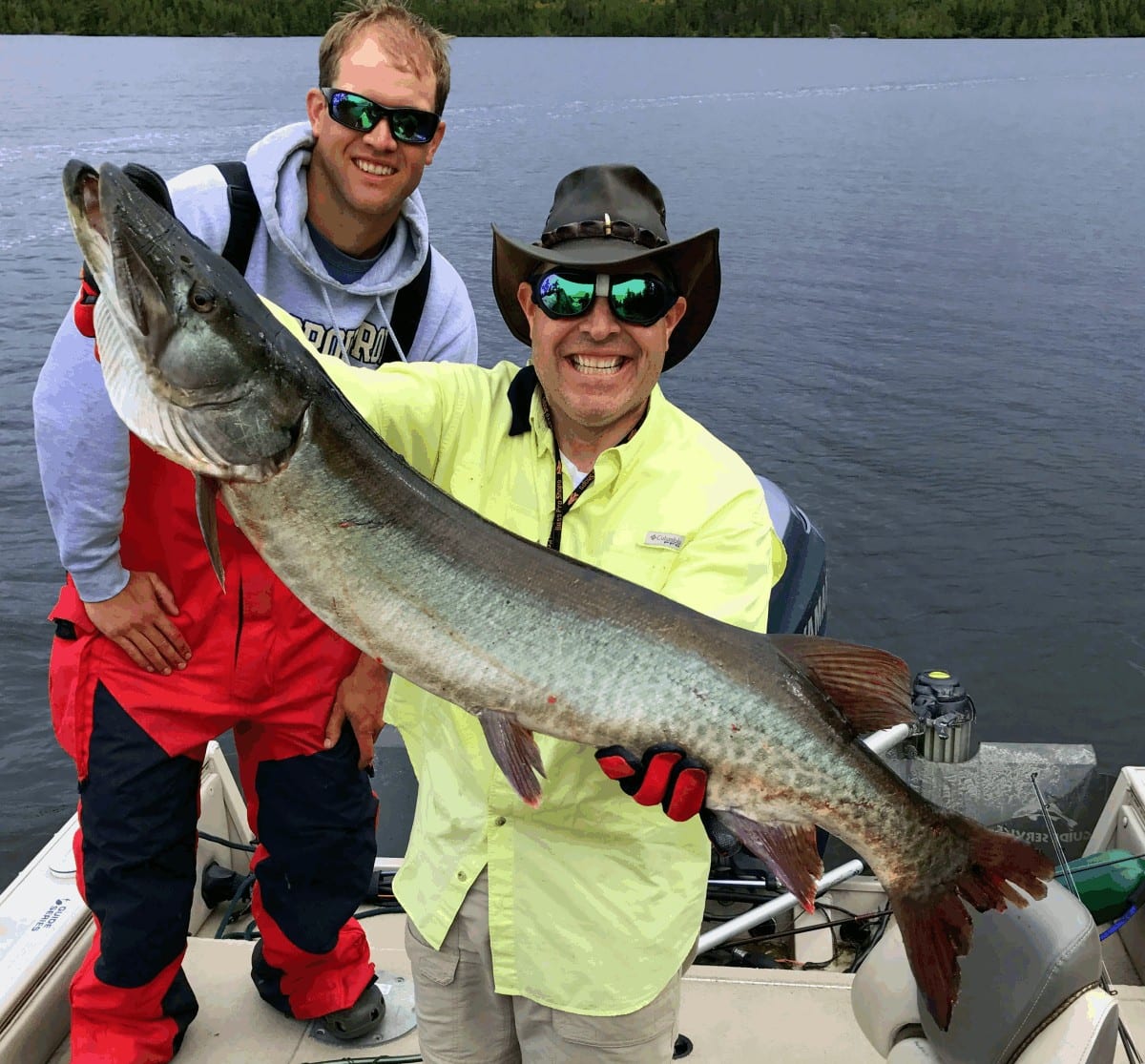
Lower Manitou Lake has terrific trophy muskie fishing. Being a large lake with such diverse structure, the legendary muskie can be found everywhere in good numbers and sizes. Like any really good muskie lake found in Northwestern Ontario, muskie are caught in many different sizes from small to gigantic monsters. With muskie of all sizes being caught, we know that they are breeding naturally which tells you that the conditions are perfect for them to flourish.
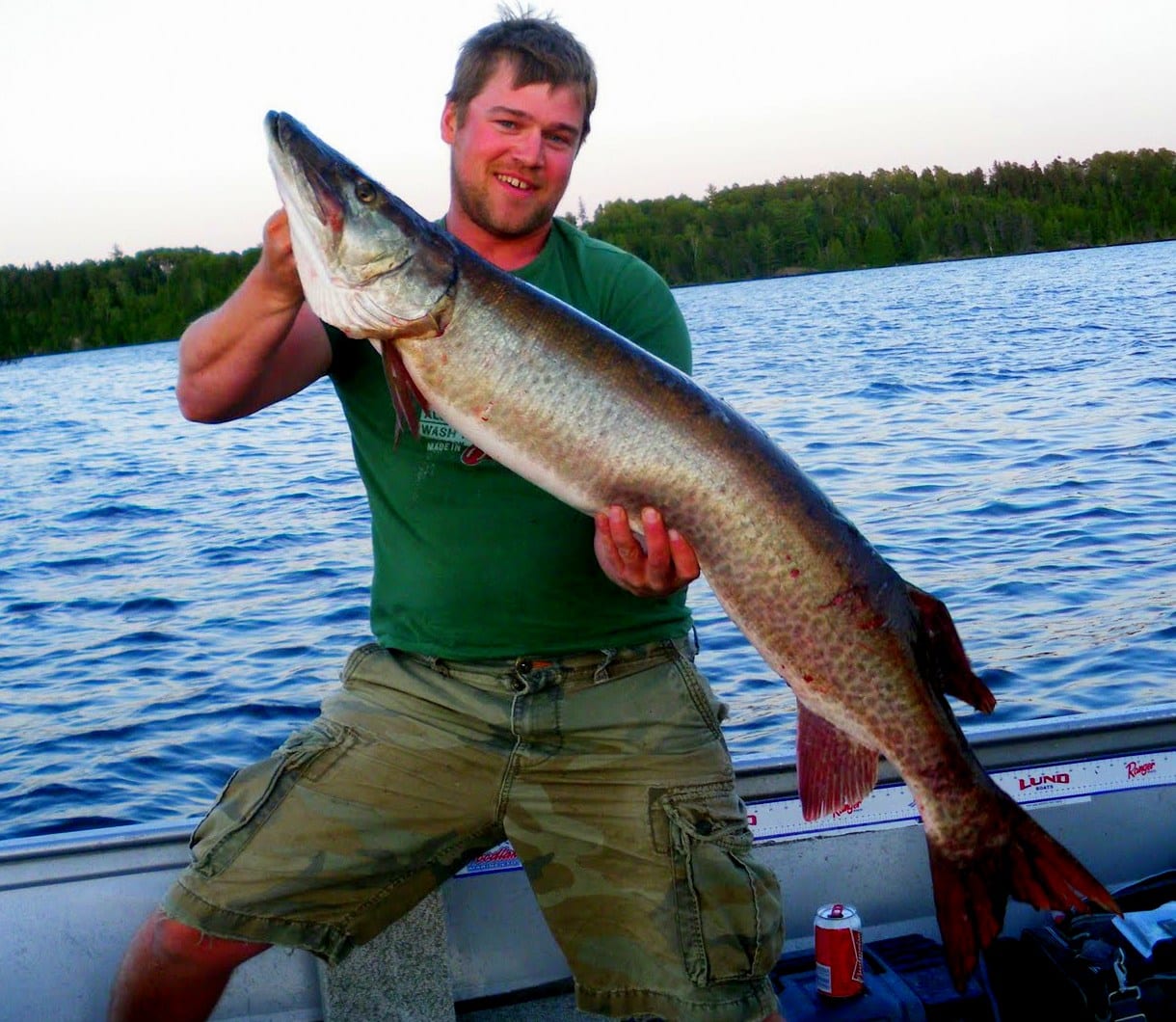
The most common sizes of muskie being caught are in the 30-40″ range. Guests who specifically come to Lower Manitou Lake for muskie and spend much of their time hunting them will catch muskie in the 41-50″ range. On occasion, muskie over 50 inches are caught and often sighted. Over the last few years, there have been fish in the 50-55″ range either caught or brought up to the boat on follows. Lower Manitou Lake gets such little fishing pressure that it’s impossible to tell how many large trophies are in the lake.
Muskie bite well in cold windy weather or hot sunny weather. As long as the weather stays consistent, the muskie are feeding. When the pressure is rising, they can start feeding like crazy for a short time; same when the pressure is dropping. Since Lower Manitou Lake is west of the Great Lakes, we don’t get the weird weather patterns as often, thus our muskie fishing is more consistent than usual.
Here on Lower Manitou Lake, the muskie fishing is outstanding from late June right through late October when the cisco spawn. The season starts the third Saturday in June.
Ontario Government biologists have designated Lower Manitou Lake as a top trophy muskie lake. Biologists feel that there are muskie of unbelievable sizes down deep feeding on lake trout and following schools of cisco. They also feel that Lower Manitou Lake is one of ten lakes in Ontario that could produce a new world record.
We have the perfect fishing boats for rent and many great fishing guides to get you on fish!
Muskie Fishing Tips
How to Catch Muskie:
Muskie, also called the muskellunge and also spelled “musky”, is an apex predator and feared by all other fish in the lake. They have a ferocious appetite and a competitive attitude, which makes them amazing fish to catch. Having the reputation of being a big tough fish means there is also a lot of folklore surrounding them. You may have heard that you have to troll really fast and use really big lures to catch them. This is not always true.
Trolling Speed for Muskie:
Muskie hunters find success trolling faster than they would for walleye, but there is a limit. A good walleye speed is around 1.5-miles per hour. Many people fishing for muskie will troll as fast as 10-miles per hour, but the prime speed is between 4 and 6-miles per hour. You will catch muskie trolling really fast and generally the really big muskie hit the faster baits, but trolling at a slower speed enables you to catch muskie of all sizes.
Size of Muskie Lures:
Traditional folklore also tells people new to muskie fishing that you have to use really big lures. The truth is muskie will hit any size lure. Tons of big muskie get caught on little jigs used by walleye fishermen. People trolling with small, medium and big lures catch muskie. The size of the lure should be based on the amount of weeds in the area or the depth you want to fish at. Lower Manitou is a clear lake and not choked with weeds so you can use bigger lures if you want. At the same time, being a clear lake, smaller lures have higher visibility thus you do not have to use big lures. The choice is up to you as it really does not matter. Muskie on Lower Manitou Lake are hungry and hit everything.
In open water, try trolling with bigger lures. The most popular big trolling lures for muskie are Willy Lures, Ziggy Lures, Swim Wizzes, large spinner baits or long shallow-running Rapalas. Perch-color and Fire-Tiger are good during the day and red seems to be good in the evening. There are many different colors and some anglers find unique color combinations that work well. In a lake with a high smallmouth bass population like Lower Manitou Lake, try using brown or green colored lures.
When in weeds it’s better to use smaller lures. 5 or 6-inch Original Floating Rapalas (the skinny ones) or Thundersticks work well. The jointed J-11 Rapalas are also an excellent lure and seem to catch muskie of any size. Spinner baits can be very effective as well.
Trick: If you have two or three people trolling in the boat, try having everyone troll with the same lure and at the same distance from the boat. This creates the look of a school of fish, which is very attractive to a muskie.
Casting for Muskie:
If you want to cast into patches of Water Cabbage or between lines of thick weeds, various kinds of crank-baits work well. Suick’s and Believers are very popular. Large spinner-baits are also very effective.
Weather:
Sunny hot days or windy cold days with rain; it does not seem to matter. Many fish start their feeding cycles when atmospheric pressure changes. The muskie seem to like it when the pressure and weather stay consistent, no matter how nice or miserable it is on the lake.
Steel Leaders & Line:
You must use steel leaders at all times. It’s best to use black leaders as sometimes a muskie will see a silver shine ahead of the lure and hit the top of the leader and bite through the line. It does happen. The line you use should be based on the size of the fishing rod you use. In open water with a light-to-medium action rod, many people use 10 to 12-pound test line. In areas where there are thicker weeds, 12 to 15-pound test can be used. What is really getting popular is the braided line. You can get 15-pound test, which is as thin as 6-pound. If you plan on doing a lot of muskie fishing and you think your fishing line is going to see a lot of abuse, then try going to the 20-pound braided. It will last longer and stay strong.
The Secret to Muskie Fishing:
The secret to muskie fishing is to have patience and try everything. You can fish for hours and hours and not catch anything and then start hitting them like crazy for an hour or two and then it stops dead again. Some people call muskie the fish of 10,000 casts. This may be true on some lakes but not on Lower Manitou Lake. Lower Manitou Lake is one of the top muskie lakes in the world. Your chances will also increase if you employ the services of one of our professional guides.
Top Muskie Lures
- Phantom ( blue or black prism, cisco, perch)
- Mepps #5 (silver) – catches a lot of different fish
- Suick (perch, yellow/black)
- Eagle Tail (black/silver, orange/black, chartreuse)
- Big Panther Martin (silver, gold)
- Bull Dawg (perch, cisco, bass, sucker)
- Big Tube (white, blue/silver, cisco, sucker)
- Cow Girls (chartreuse, silver/blue, silver/black, orange/black)
- Grandmas ( blue/silver, bass, sucker, cisco, bumblebee)
- Jakes (bumblebee, yellow/black, Perch, Bass, cisco, sucker)
- King Kong
Muskie Weight Calculator
Manitou Weather Station
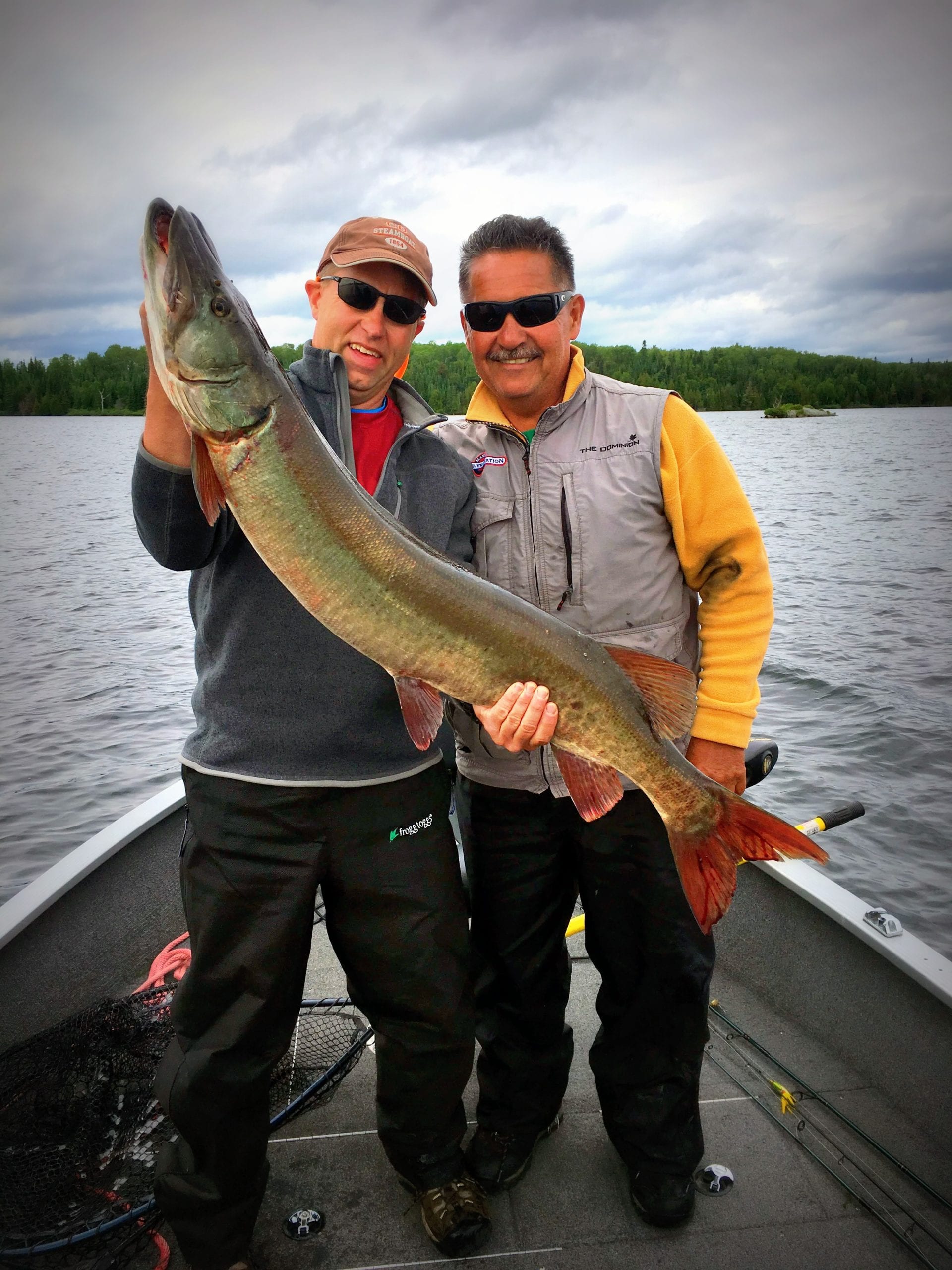
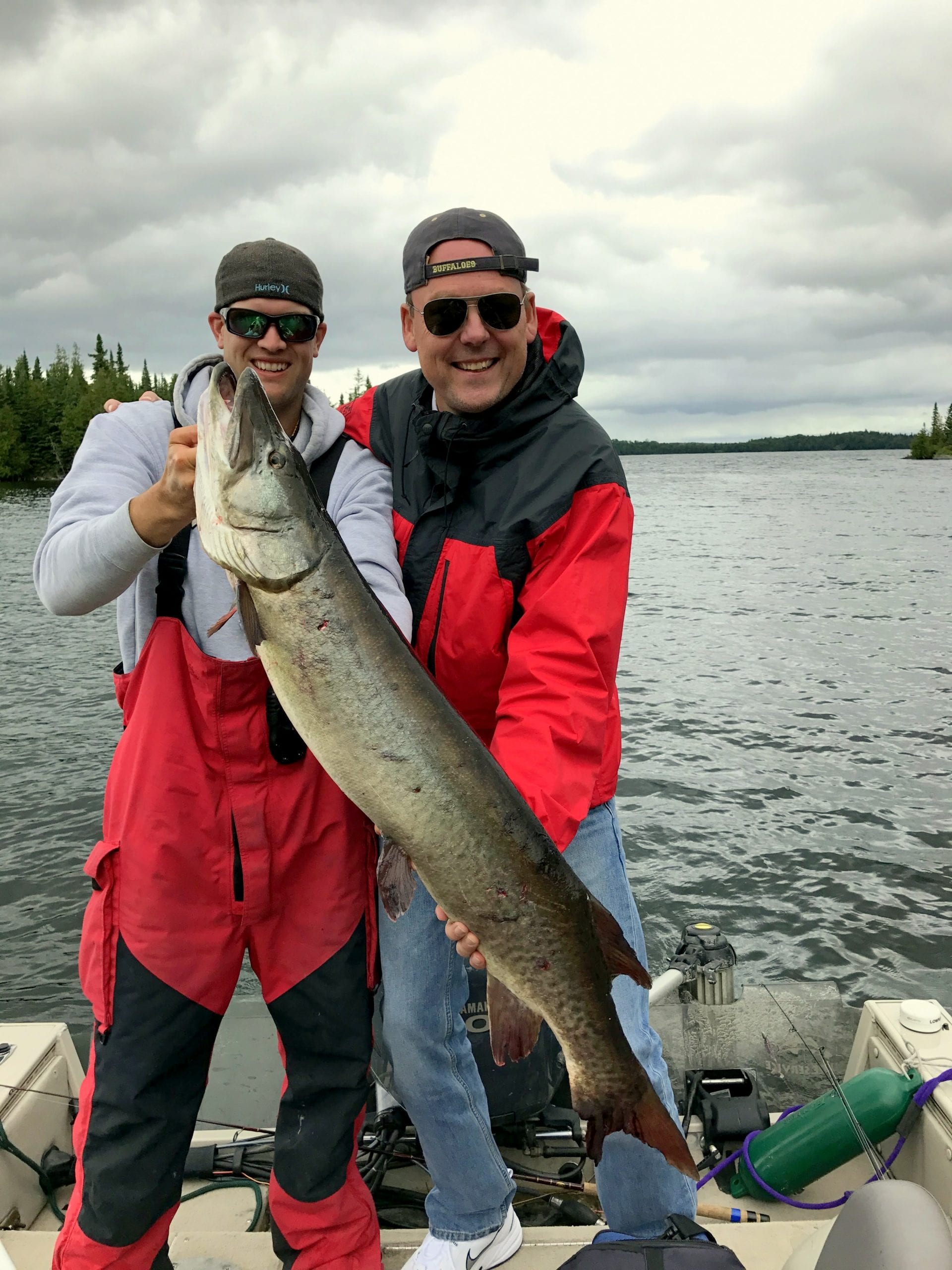
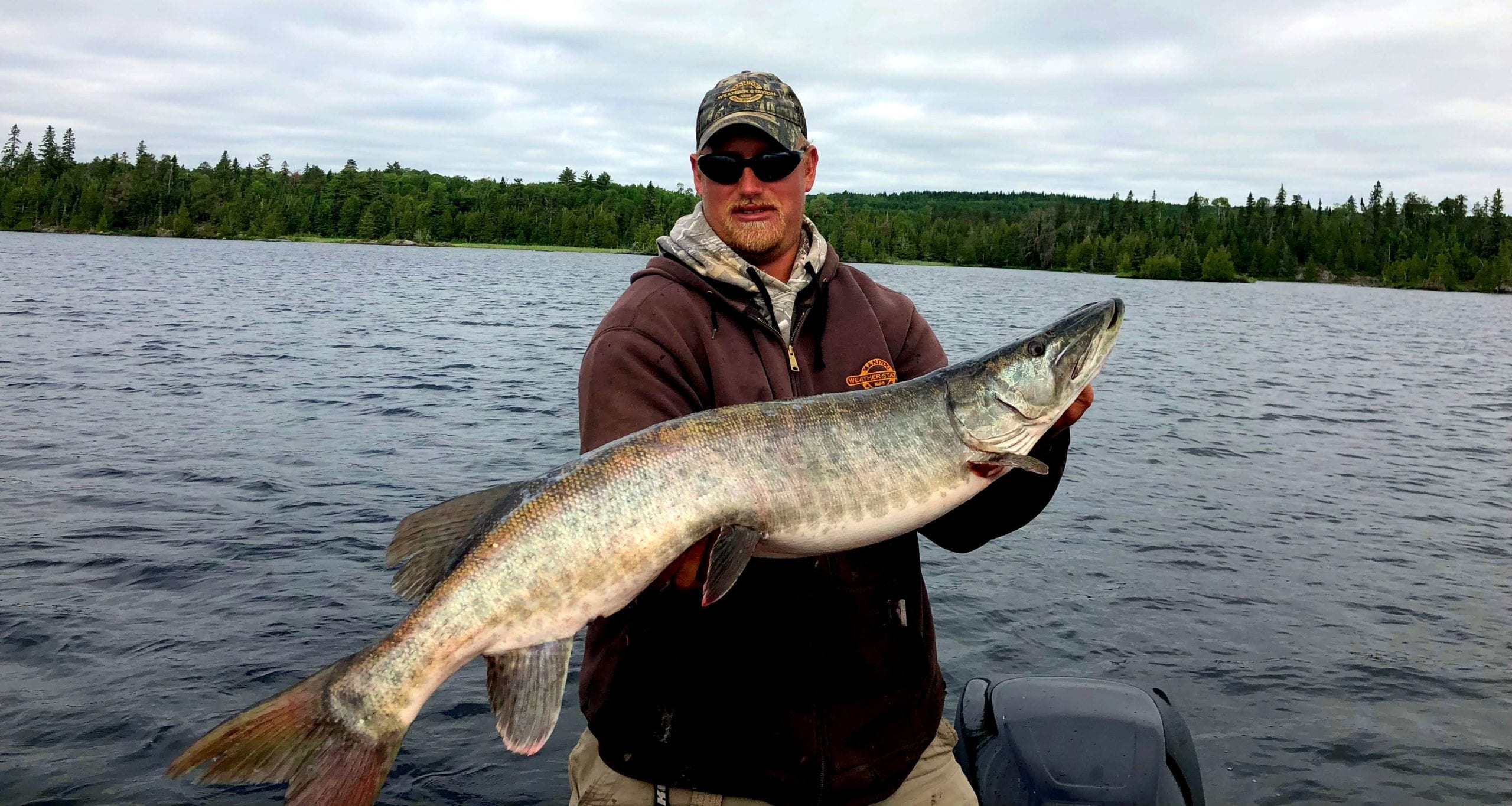
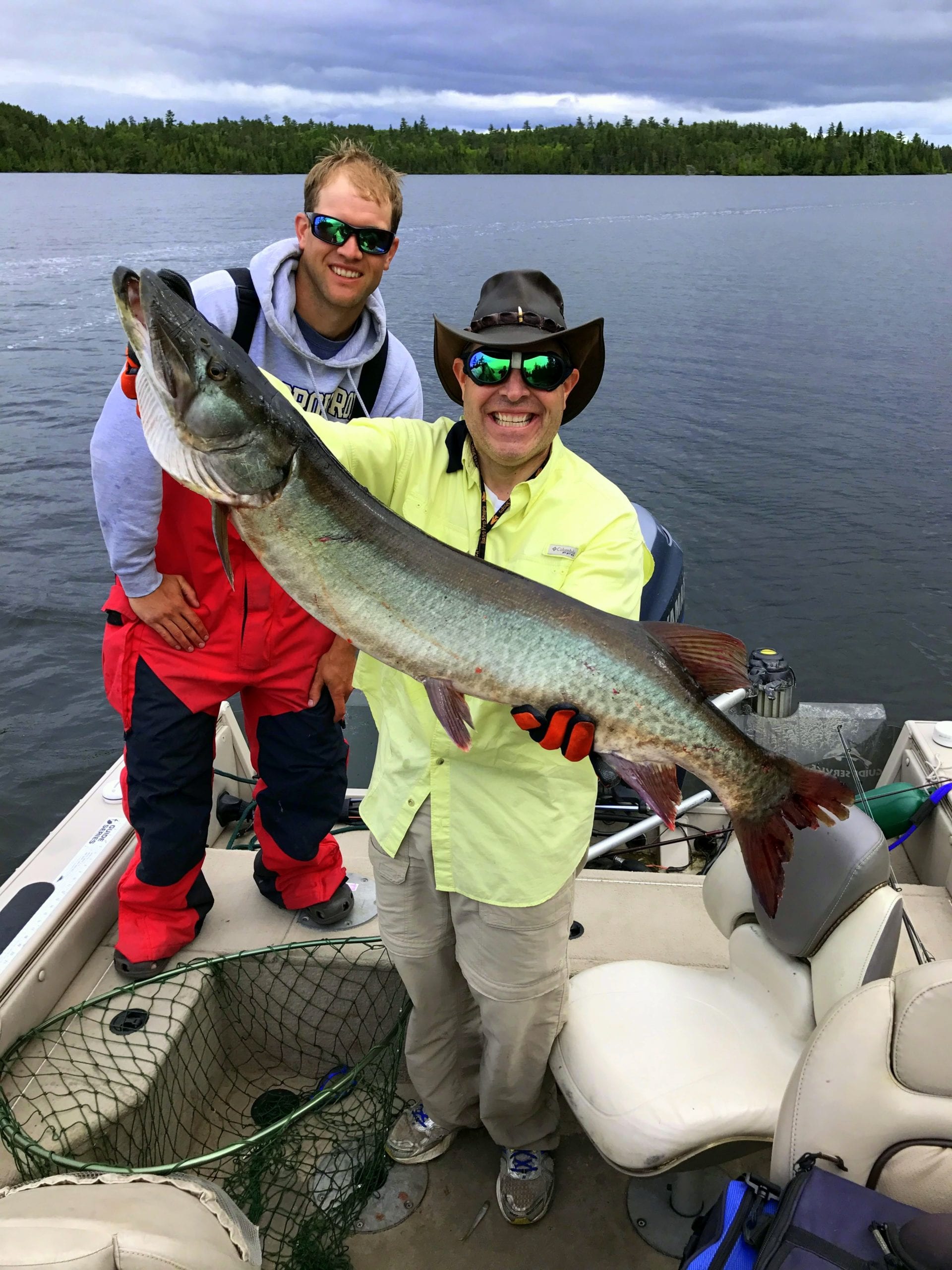
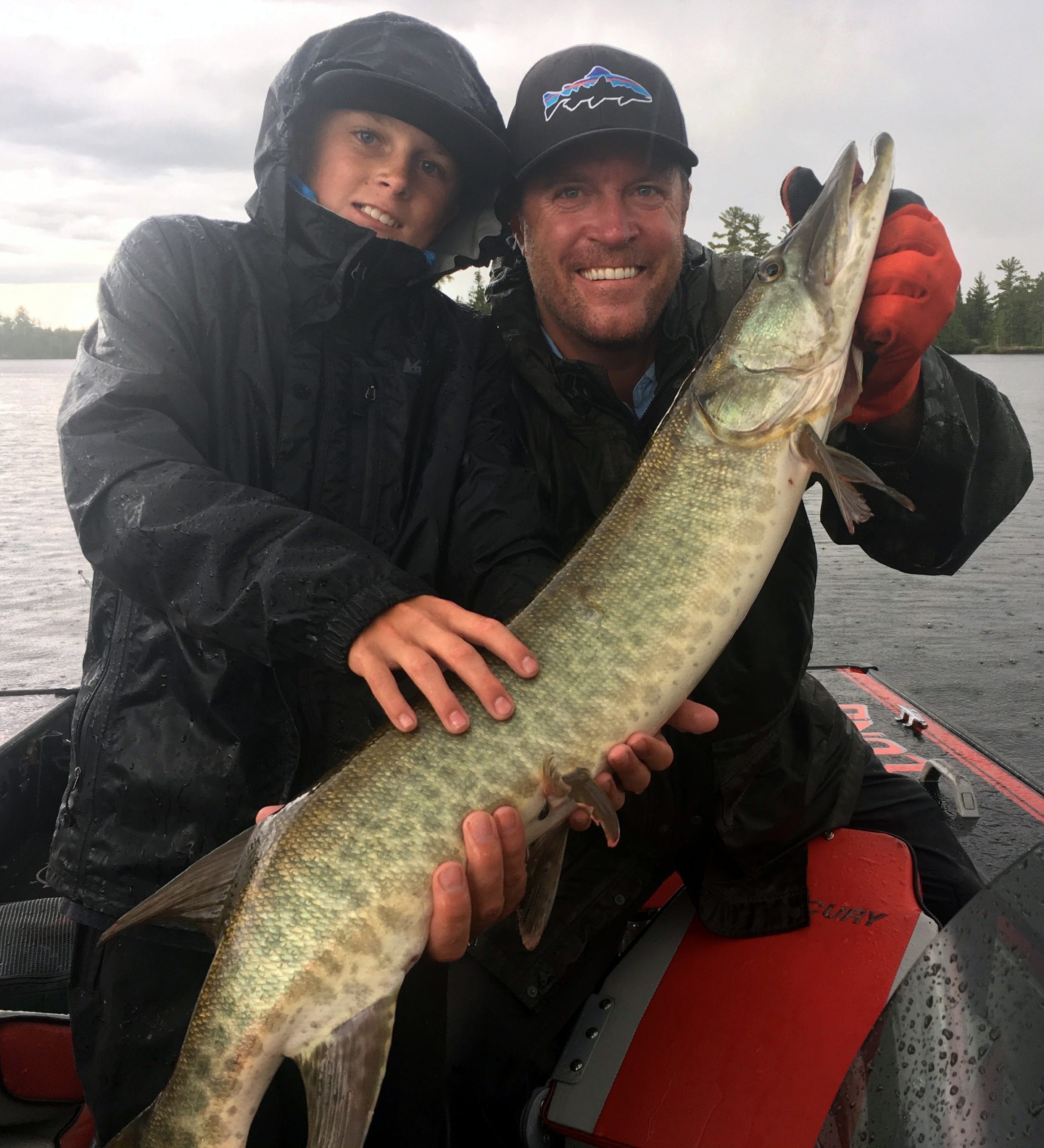
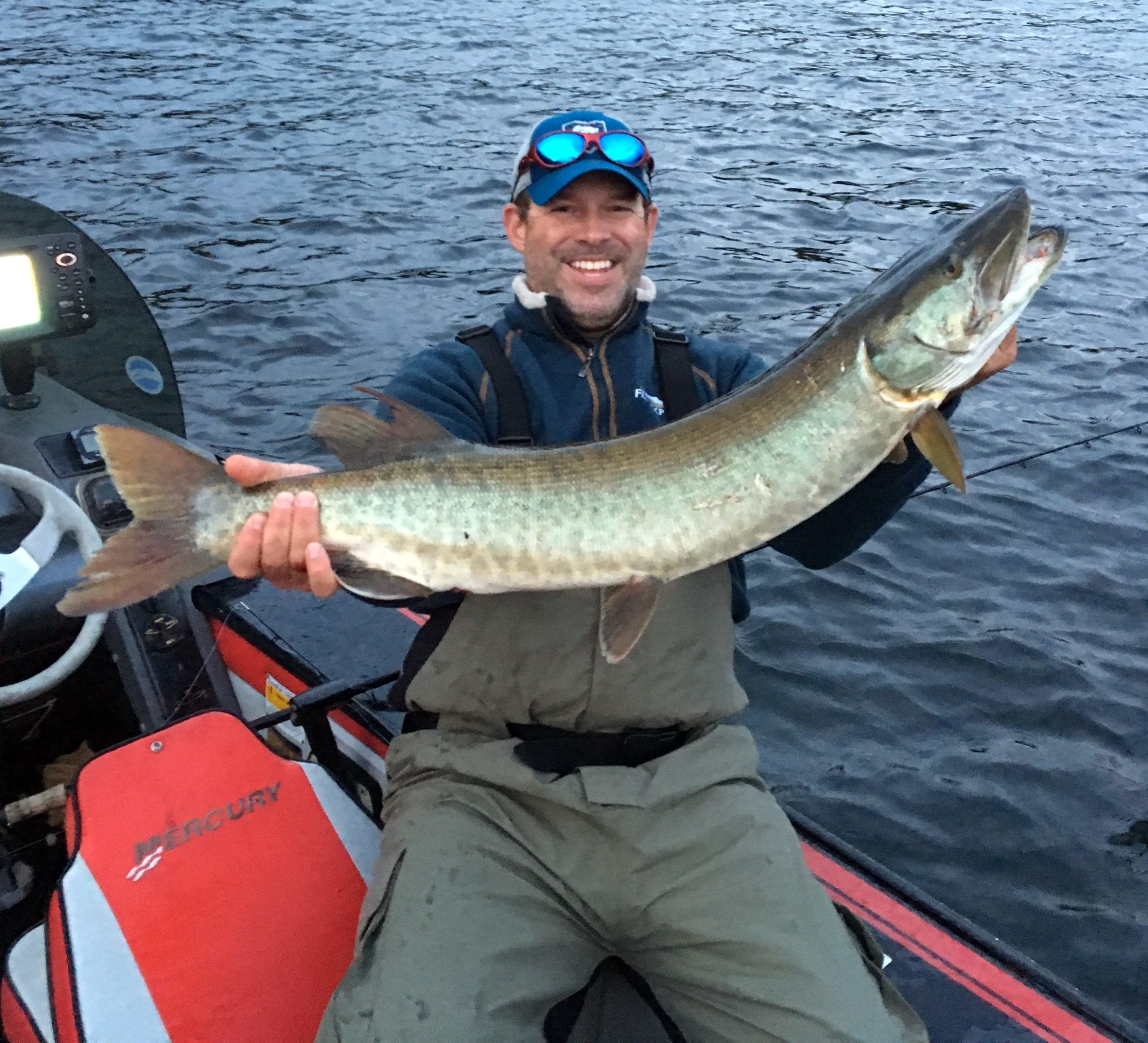
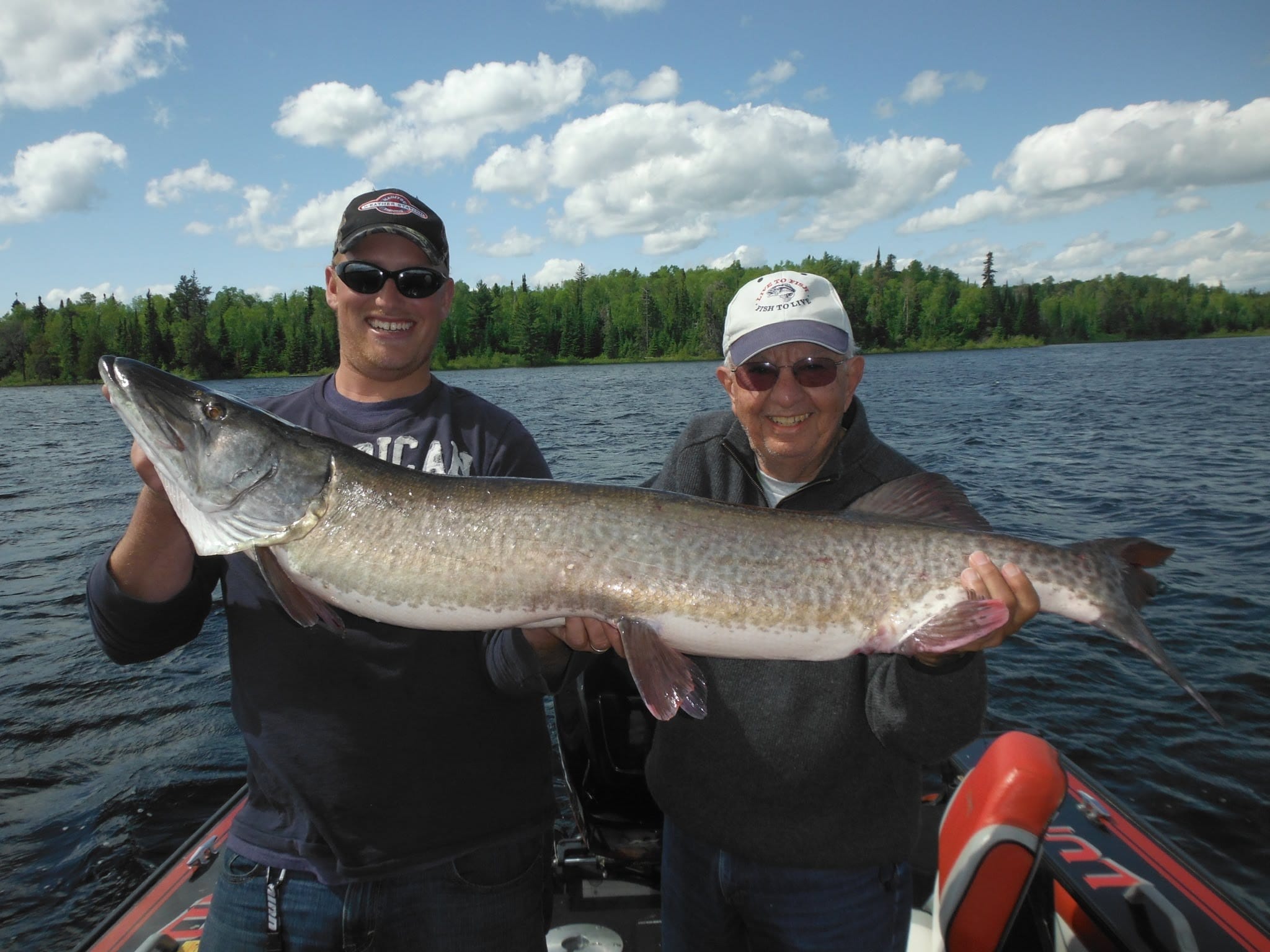
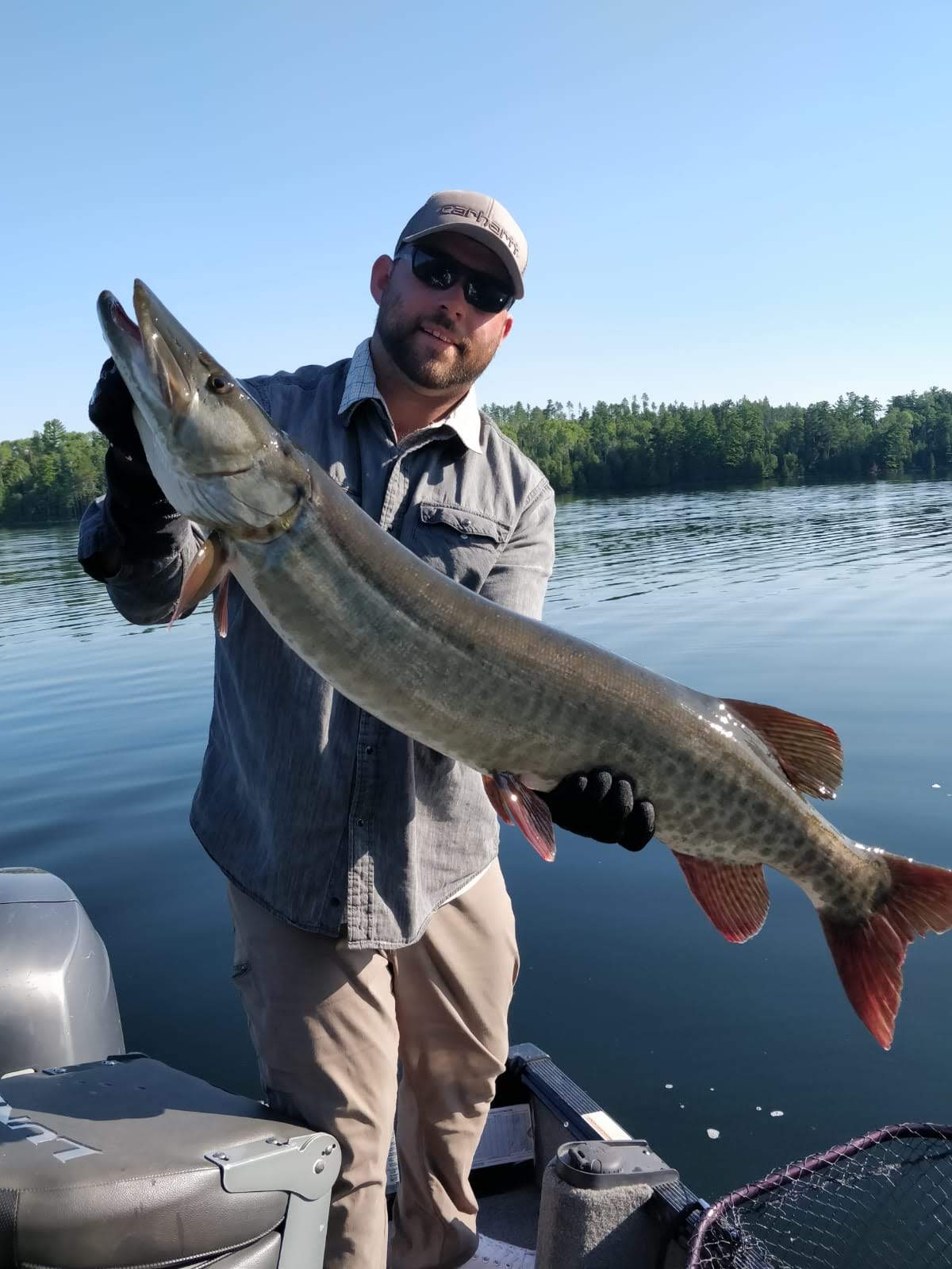
Muskie Fishing Photos

Muskie Fishing on Lower Manitou Lake: Frequently Asked Questions
When is muskie season on Lower Manitou Lake?
Ontario’s muskie season on Lower Manitou Lake opens the third Saturday in June and runs through December 15, both dates set by regulation. Muskie trips at Manitou Weather Station can be booked from the opener through late October. The lake fishes well from the opener onward, and fall is one of the two strongest windows of the year.
How big do muskie get on Lower Manitou Lake?
Most muskie caught here run 30 to 40 inches, and anglers fishing specifically for muskie regularly land fish in the 41 to 50 inch range. Muskie over 50 inches are caught or sighted most seasons.
When is the best time to catch a big muskie on Lower Manitou Lake?
Big fish come through the whole season. Plenty of heavy muskie are taken early, right after the spawn, when they lie up in the shallows and are as catchable as they get all year. The fall is the other strong window, as cooling water pulls muskie shallower to follow the ciscoes they feed on. There is no wrong month to book a muskie trip here.
Is Lower Manitou Lake a good muskie lake?
Yes. Ontario government biologists rate Lower Manitou Lake a top trophy muskie lake, and have named it one of only ten lakes in the province considered capable of producing a new world record muskie. The lake is deep and cold, and biologists believe its largest muskie feed on lake trout and cisco well below the depths most anglers fish.
What is the biggest muskie ever caught on Lower Manitou Lake?
A 56-pound 11-ounce muskie, caught in Glass Bay on Lower Manitou Lake on August 30, 1984 by Eugene Borucki of Illinois. It measured 54 7/8 inches long with a 25 1/2 inch girth, and it was weighed after the fish had already regurgitated one to two pounds of food. At the time it was the largest muskie registered anywhere in the world in twenty years, and ranked 29th on the all-time verified list. The catch won Canada’s Molson contest and set line-class records with both the International Game Fish Association and the National Fresh Water Fishing Hall of Fame. He caught it trolling a black-and-silver 5 1/2 inch Rapala Husky floater on 30-pound line, about four feet down over shoals in 20 to 25 feet of water with scattered weed patches – two in the afternoon, semi-overcast, windy, about 60 degrees. He had already caught and released two muskie of roughly 14 and 18 pounds that morning.
What is the best way to fish for muskie on Lower Manitou Lake?
Trolling at 3 to 6 miles per hour covers open water well, and casting is effective around structure. Three miles an hour is often the better speed in colder water, and six moves fast enough to trigger the big ones. Early in the season the weed beds hold the fish; as the water warms through summer the reefs come into their own, along with the points between them. Lure size matters less here than patience, since muskie on Lower Manitou Lake will hit lures of any size.
What lures work best for muskie on Lower Manitou Lake?
For trolling open water, Grandmas, Willy Lures, Ziggy Lures and jointed Rapalas all produce. For casting around structure and weed beds, bucktails like Cowgirls and Showgirls take fish, along with soft plastics like Bulldawgs and Swim Dawgs, and Suicks, Believers, King Kongs, Hellhounds, Giant Killers and large spinnerbaits. Owner and guide Kris Esselink fishes Phantoms, big tubes, Cowgirls, Bulldawgs and Eagletails.
Do you offer guided muskie fishing, or do I need my own boat and gear?
Both are covered. Manitou Weather Station provides experienced fishing guides who fish Lower Manitou Lake all season, and rents fishing boats to guests running their own trips, so you can book a muskie trip without bringing your own boat or equipment. Owner Kris Esselink is one of the guides, and has fished this water his whole life. The owners learned this water from the Indigenous guides who fished it long before the camp existed.
Do you practice catch and release for muskie?
Yes. Muskie are released here, every one of them. They are slow-growing fish and the trophy population is the reason the lake has the reputation it does, so they go back to be caught again. Guides will help you handle and release a big fish quickly and get the photo while you are at it.
How do you get to Manitou Weather Station?
Two ways, and unlike most remote lodges in Northwestern Ontario you get a choice. Drive and boat in – about 43 miles by road from Fort Frances on Highways 11 and 502, then Cedar Road and Esox Landing Road to the boat launch at Esox Landing, and roughly 24 miles north by boat to camp. Or fly in by float plane from Fort Frances, about 45 minutes. Because there is road access to the launch, you can bring your own boat and as much gear as you want instead of packing to a float plane’s weight limit. In winter, access is by snowmobile.
Do I need an Ontario fishing license to fish for muskie at Manitou Weather Station?
Yes. Every angler needs a valid Ontario fishing license and an Outdoors Card, and one license covers muskie, lake trout, walleye, northern pike and smallmouth bass alike. Buy both before you arrive, online from the Ontario government, at any ServiceOntario location, or from tackle and outdoor stores in Fort Frances on your way through. Non-residents choose between a Sport license and a Conservation license; the Conservation license costs less and carries lower catch limits. Size and catch limits are set by Ontario regulation and change from time to time, so check the current fishing regulations summary before you travel. There is Starlink internet at all three camps, so you can check the regulations or sort a license online from the lake if you need to. Visitors from the United States also need a passport or another approved document to cross the border at Fort Frances.
How do I book a muskie trip at Manitou Weather Station?
Trips are booked directly with Manitou Weather Station. Current packages, open dates and rates are on the Packages & Rates page, and the Contact page will reach the family with any questions before you book.